

EPOS B20 review: A solid streaming microphone
Our Verdict
As a general gaming and streaming microphone, the EPOS B20 is piece of cake to use and finely crafted. Nosotros're just not convinced that's plenty for the money.
For
- Bully design
- Crisp, clear sound
- Multiple recording patterns
Against
- More than expensive than competitors
- Onboard controls could exist refined
Tom's Guide Verdict
As a general gaming and streaming microphone, the EPOS B20 is easy to use and finely crafted. We're only not convinced that's enough for the coin.
Pros
- +
Dandy design
- +
Crisp, clear sound
- +
Multiple recording patterns
Cons
- -
More expensive than competitors
- -
Onboard controls could be refined
Microphones like the EPOS B20 show how low the barriers to streaming have become. There's no technical circulate knowledge required — just a halfway respectable PC and some plug-and-play peripherals.
EPOS B20 specs
Price: $199
Connexion: USB
Ports: USB-C, three.5mm aux out
Condensers: 3
Directional patterns: Cardioid, omnidirectional, bidirectional, stereo
Size: nine.four 10 4.1 ten 4.1 inches
Weight: one.1 lbs
Or at to the lowest degree, microphones kind of similar the EPOS B20 evidence that. This is actually ane of the more than expensive USB mics I've tested, and then it'south not exactly a device for first-time streamers. Instead, it'south for those looking to upgrade their production values. As our total EPOS B20 review will explain, in that location's enough raw quality here to earn a spot on our best gaming microphones listing, but you should consider the contest before going alive.
- Our picks of the best microphones overall
- The best USB microphones for simple setup
EPOS B20 review: Cost and availability
- $199 from multiple retailers
- Available in black only
At $199, the B20 doesn't veer into professional person microphone territory, merely it'southward definitely pricey by the standards of desktop USB microphones. The ever-popular Blue Yeti, by comparison, has dropped every bit low as $99, while the excellent JLab Talk launched at $99 and has gone on sale for merely $56. The Rode NT-USB Mini likewise merely costs half every bit much as the B20.
The B20 is bachelor now from Amazon and Best Buy.
EPOS B20 review: Blueprint
- Mature aesthetic
- Lots of controls, but no book/gain markers
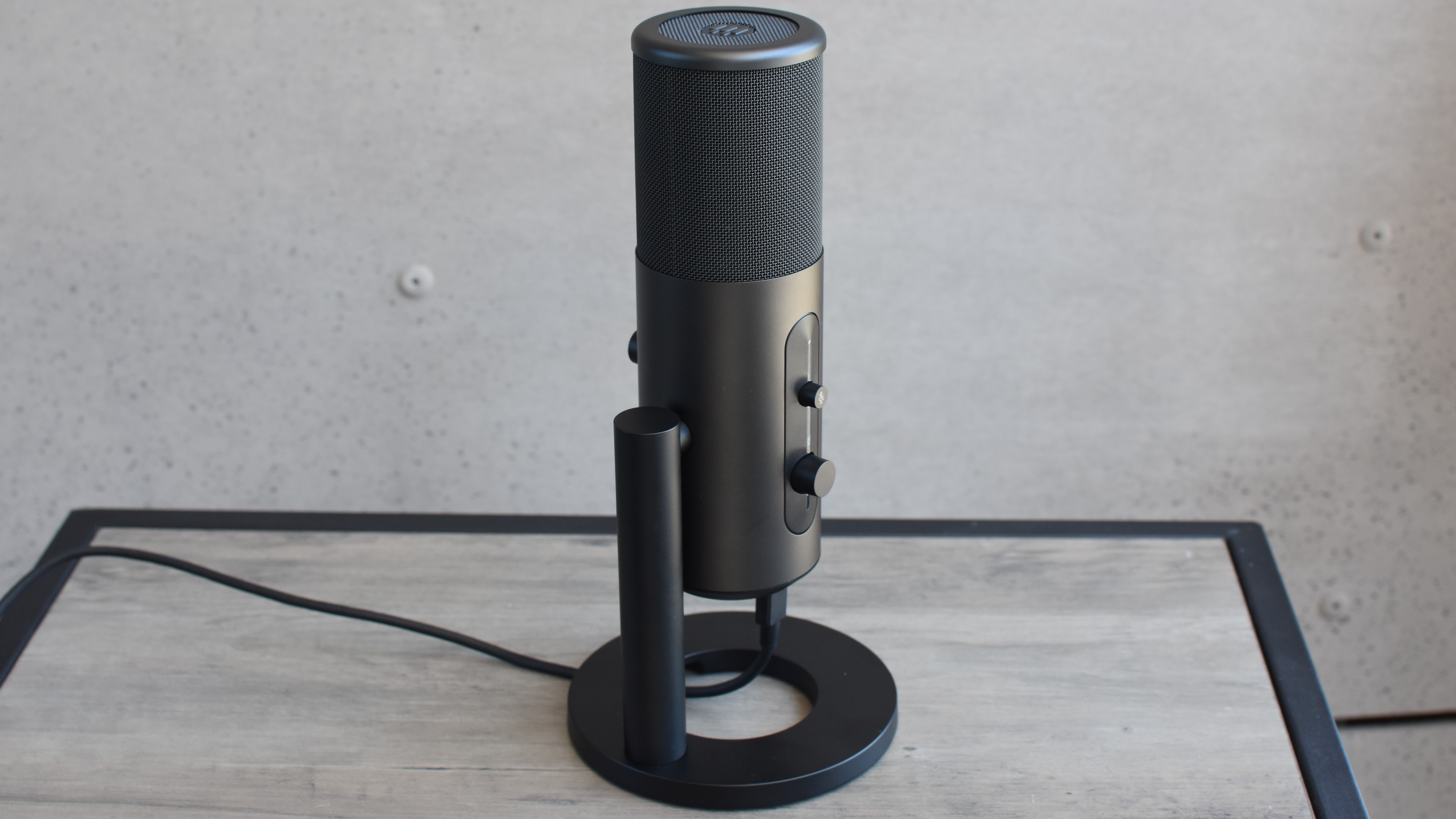
For all my reservations near the price, the B20 makes a splendid first impression. The slim proportions, the metal construction, the matte black finish — this is equally close to chic as a gaming or streaming microphone tin can get.
The stand is flexible too. Not so much in the conventional sense — pivoting is the only aligning option — but you can detach the back up stalk from the base, which and then lets you lot adhere it to a gaming-friendly boom arm stand up. While a lot of USB microphones allow you lot swap in your own stand, they ordinarily put the mount on the microphone itself. Past mounting to a separate stand up via the support, you lot can keep its pivot betoken, for even easier adjustment.
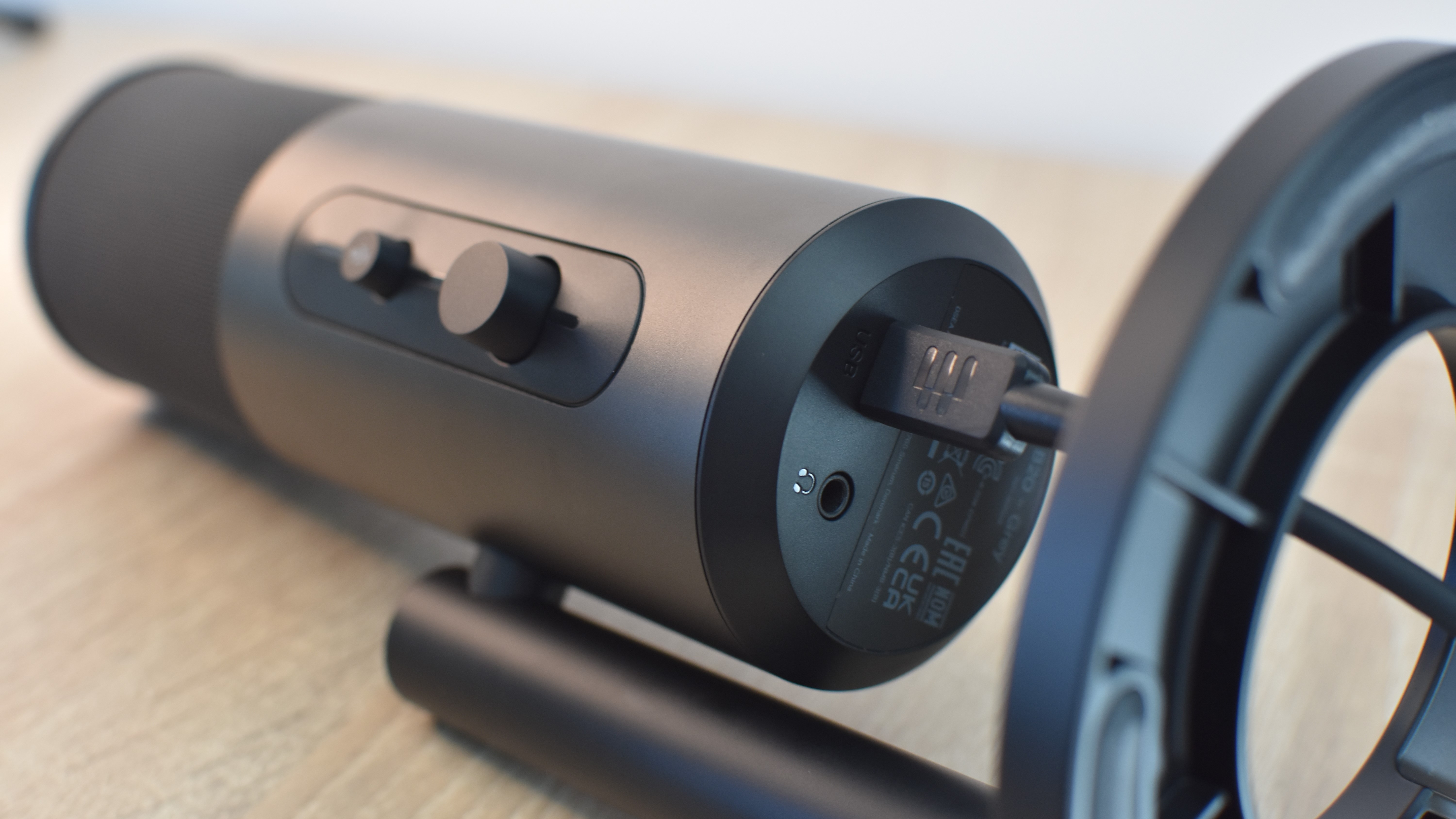
Flipping the B20 around too provides quick access to the underside, where you'll observe the USB-C port (a USB-C to USB 3 cable is included) and a 3.5mm output. The latter is for microphone monitoring, so you tin can hear what you lot audio similar — very useful for setting up.
The B20 too matches the Blue Yeti and JLab Talk in providing four distinct recording patterns: cardioid, bidirectional, omnidirectional and stereo. In theory this could brand the B20 viable for group podcasts or console recording, though for gaming and streaming you lot only need cardioid. This records from directly in front end of the mic to minimise background racket.
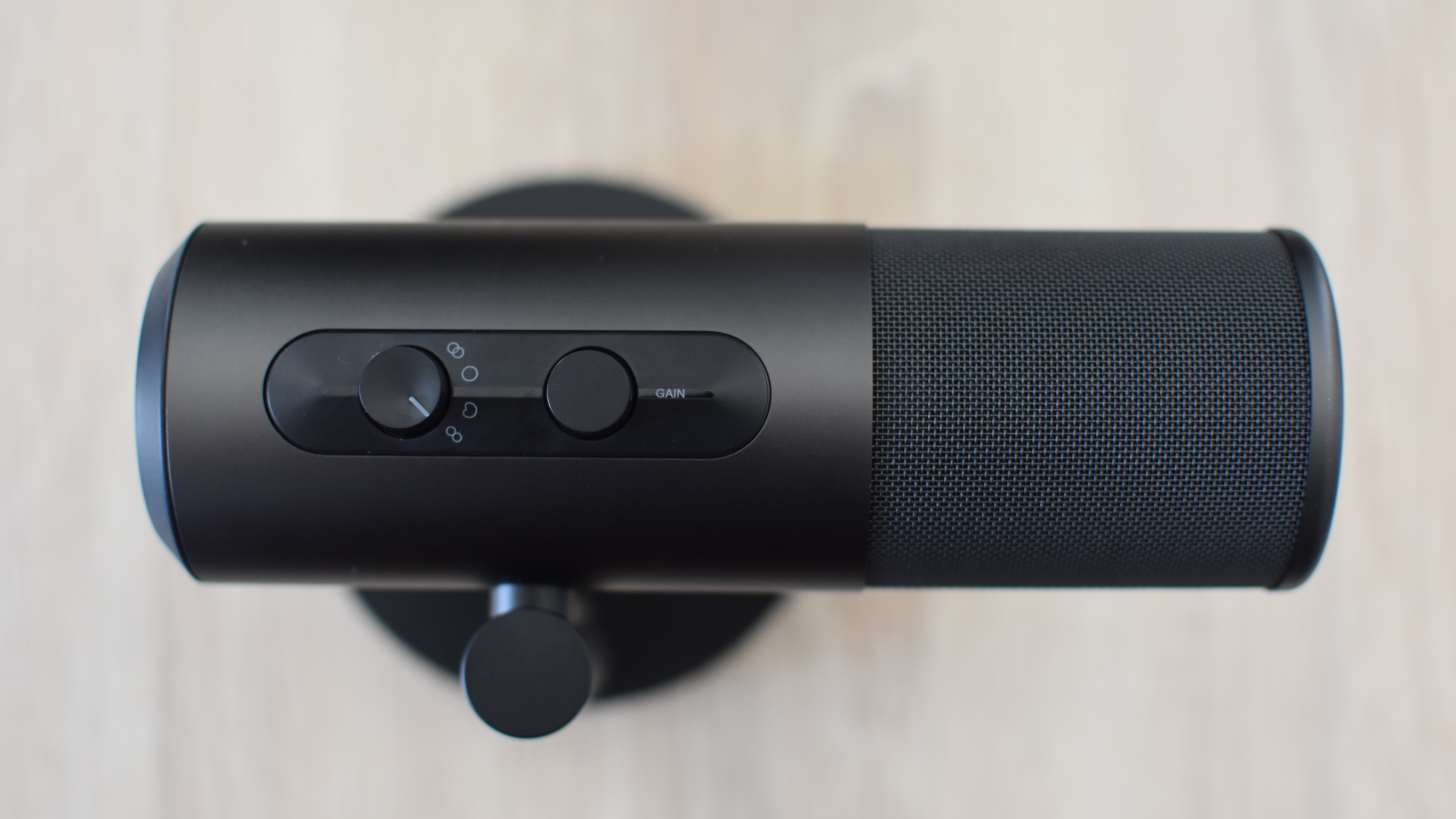
The 4-way pattern switch is placed on the rear, next to a proceeds dial, while the front features a mute push and a volume control for monitoring. Information technology's a highly practical prepare of controls, especially considering cheaper mics like the Blueish Yeti Nano don't have gain dials at all.
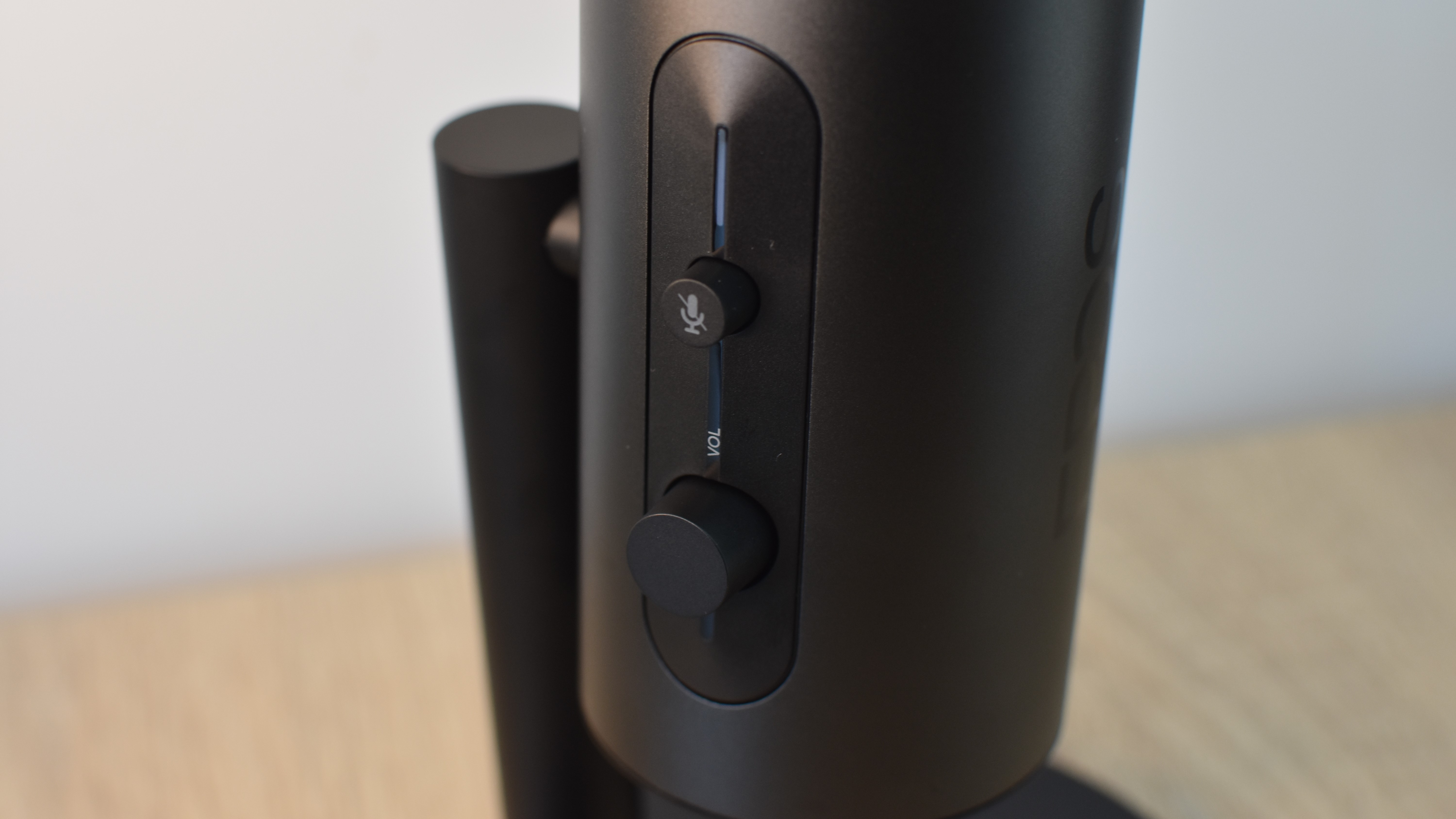
Nevertheless, both Blueish and JLab take implemented these controls better than EPOS has on the B20. There are two bug with the volume and gain dials here: they can turn infinitely in either direction, and they don't accept level markings. Together this makes information technology impossible to tell what your levels are at a glance, including whether your settings have been changed since the last time you lot recorded.
This led to slightly embarrassing situations when I'd leap on Discord and accidentally deafen my friends, having unknowingly nudged the gain too high, and had to inquire them to say "when" as I gradually lowered information technology to less eardrum-rupturing levels. Even the cheap Talk has an idiot-proof LED ring to brandish volume and proceeds levels, so for the B20 to rely purely on monitoring is disappointing.
EPOS B20 review: Sound quality
- Articulate and balanced
- Picks up some groundwork noise, simply not much
- Still just similar to much cheaper mics
At least when your settings aren't askew, the B20 sounds expert. Very good, even: I was impressed by how much particular in my voice was picked upwards by the cardioid fashion, and fifty-fifty if you don't get as much use out of them, the other patterns perform their roles well.
Bidirectional and omnidirectional modes spread the quality around equally, unlike how the JLab Talk favors the front-facing speaker, and in that location's a clear left-to-right soundstage in stereo recordings.
There was some reverb when I recorded in my laminate-floored living room, so you lot tin can't ignore the acoustics of your own room, but this is true of most consumer-grade USB microphones. Serious streamers should consider sound dampening with almost whatever mic they choose.
In-game, my friends too reported a high level of quality and clarity, and apparently couldn't hear groundwork noise like my Boob tube (which was playing nearby) or my mechanical keyboard. I found this intriguing, every bit I could hear my keyboard clacking in my local recordings, though plain you can use game audio to drown it out.
For virtually general gaming communication and live streaming, then, the B20 undoubtedly sounds good enough. Simply does information technology audio proficient for the cost? As effective as this microphone is, remember that it costs twice as much as the JLab Talk, or the Blue Yeti if you catch it in a sale. But I can't say it sounds significantly better; if annihilation I slightly prefer the warm, more intimate quality of the Talk. And I tin can't mess up the gain on that i.
EPOS B20 review: EPOS Gaming Suite
- Adds various audio tweaks
- Useful for streamers, just not mandatory
To be off-white, in that location is one manner of fine-tuning the mic levels, and a few other aspects too: the EPOS Gaming Suite app. This software isn't necessary for the B20 to office, but does grant desktop access to proceeds control, boosted voice profiles and fifty-fifty an adjustable dissonance gate.
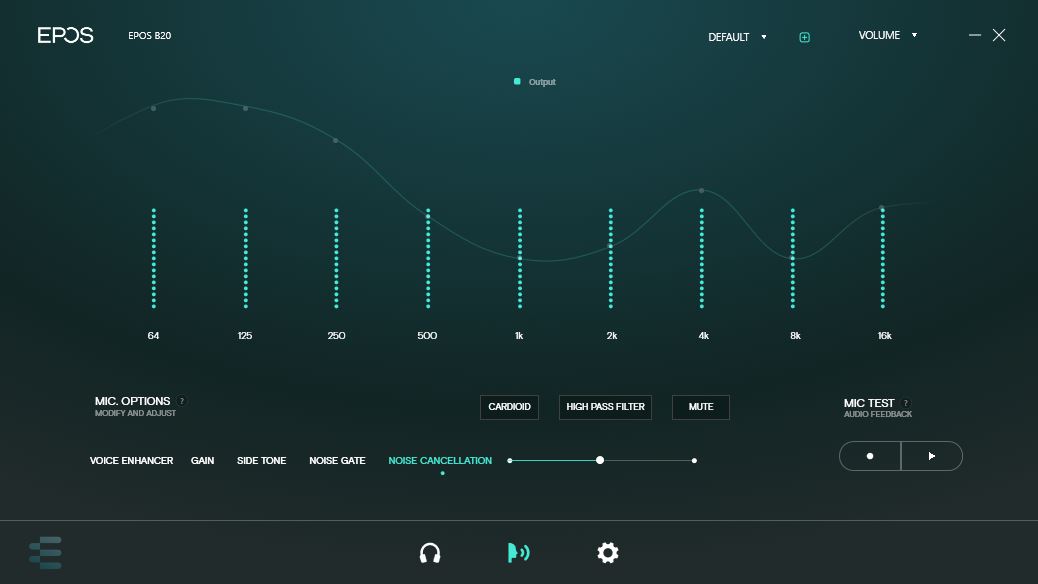
Information technology's worth installing if you're a streamer, and its mic test feature is particularly useful for ensuring your settings are all correct. Though I didn't become much mileage out of the seemingly more advanced features: even the "Warm" phonation profile mainly just emphasised unwanted reverb, while the racket gate might be decent for cutting out the quietest of groundwork racket, it couldn't silence my keyboard without also cutting my vocalization out.
EPOS B20 review: Verdict
The EPOS B20's overall blueprint and cadre sound quality make information technology a good gaming and streaming mic; I'm nonetheless half-tempted to Sharpie on some level indicators to the dials, just this oversight can at least be compensated for via the app. And the sound quality is more than than adequate, even if you never touch the Gaming Suite.
The bigger problem is, again, the price. If the B20 cost the aforementioned as the Blue Yeti, choosing between the two would be a lot more difficult; at $199, it's hard to run into where the extra coin actually goes. Wait for a auction, or pick up one of the B20's much more affordable rivals instead.
- More: Check out the all-time headphones with a mic for vocalism and video calls

Source: https://www.tomsguide.com/reviews/epos-b20-microphone
Posted by: howarthyesquir.blogspot.com
0 Response to "EPOS B20 review: A solid streaming microphone"
Post a Comment